

By Lauren Clark
National Shifts in Sports Participation
Across the United States, national data reveals evolving preferences in what people play and follow. Sports like pickleball and table tennis have seen strong growth over the past decade, while others—particularly traditional team sports—are seeing more modest increases or even declines in some regions. Fans are increasingly drawn to quicker, more accessible games and experiences. Participation studies show that sports like softball and volleyball are staging rebounds close to pre-pandemic levels, whereas sports such as baseball and tackle football have not recovered as fully. Indoor and recreational-format activities are attracting attention alongside these changes.
How Norfolk Is Responding
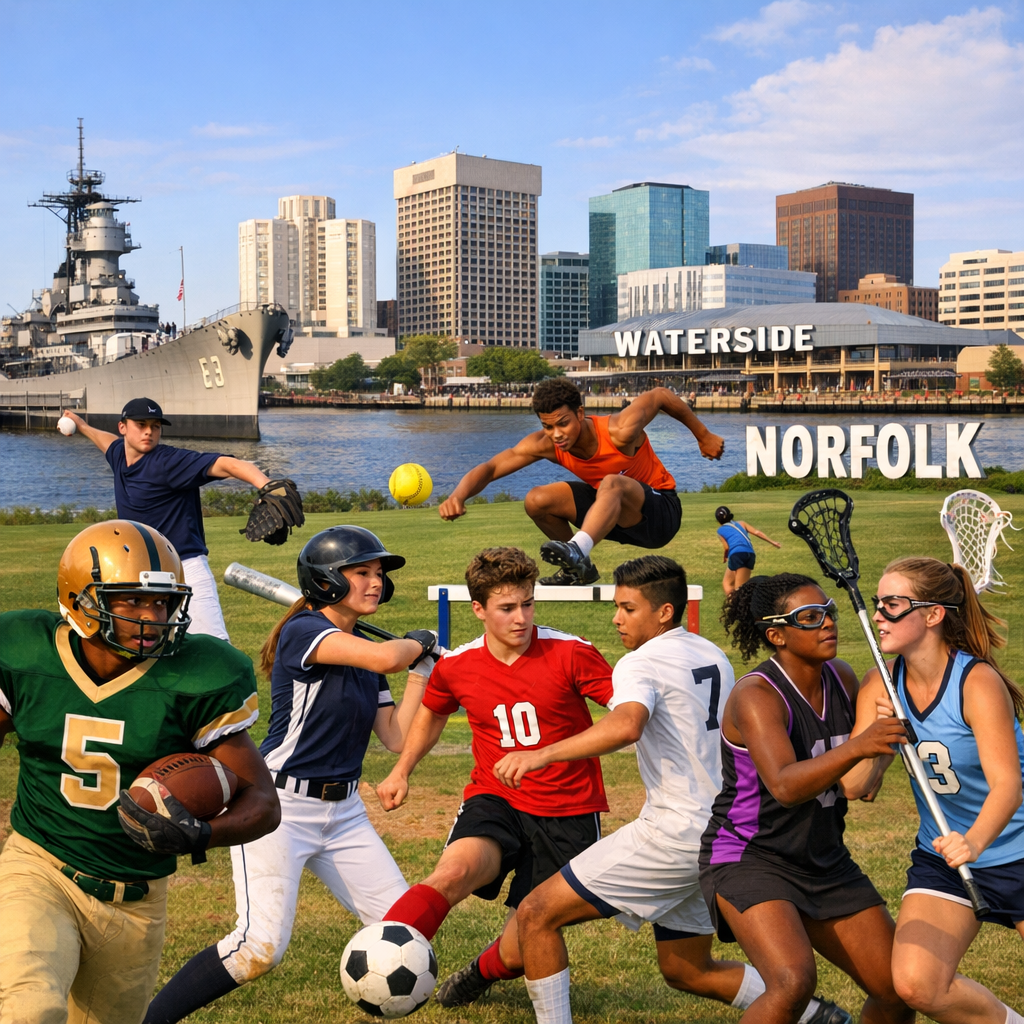
In Norfolk, local high schools, independent schools, and colleges are adapting to these national trends by expanding their athletic programs and offering broader access. Norfolk Public Schools, for example, now allow 8th graders to participate in junior varsity programs at their zoned high schools—opening doors to earlier engagement in high school-level sports. This new format also reflects growing community support for youth participation across sports like baseball, basketball, field hockey, and football. At the ticketing level, spots are being limited—with general admission via apps, and lower rates for middle school events—indicating rising demand paired with strategic pricing measures.
Local Institutions Leading the Way
Norfolk Christian Schools and Norfolk Academy each provide wide-ranging athletic opportunities. Norfolk Christian’s programs cover middle school through varsity levels and include sports like lacrosse, swimming, volleyball, and wrestling. Likewise, Norfolk Academy offers 27 sports and dozens of interscholastic teams for grades 7–12, supporting students who compete in multiple seasons in schools of all kinds. These institutions are examples of how school size and resources can still foster deep athletic participation across both genders and all age groups.
College-Level Presence
Playing at the college level, Norfolk State University fields 13 varsity sports teams at the NCAA Division I level, including football, basketball, baseball, and women’s volleyball. The Spartans compete in the Mid-Eastern Athletic Conference and often serve as an aspiration for high school athletes in Norfolk. With athletic programs operating year-round and a steady presence in postseason contests, the college model provides both visibility and structured development paths for local talent.
Opportunities & Challenges
• Opportunity: Broadening access earlier—via middle school and JV options—means young athletes get experience and preparation sooner, which helps talent development and engagement.
• Opportunity: Schools offering many sports allow students to explore interests and grow in less traditional areas—surfacing potential in newer or less common sports.
• Challenge: Funding and resources remain constant concerns. Fields, equipment, coaching, and travel require financial support that not all schools can secure.
• Challenge: Maintaining high levels of participation while managing safety, scheduling, and student workload becomes more complex as programs expand.
What to Watch Moving Forward
Expect more movement toward early inclusion—middle school students joining high school-level teams—and growing demand for sports beyond the mainstream. Monitoring how Norwich’s public and independent schools evolve their programming, along with Norfolk State’s success in recruiting and developing student-athletes, will offer key markers of where our community stands in relation to national shifts.