

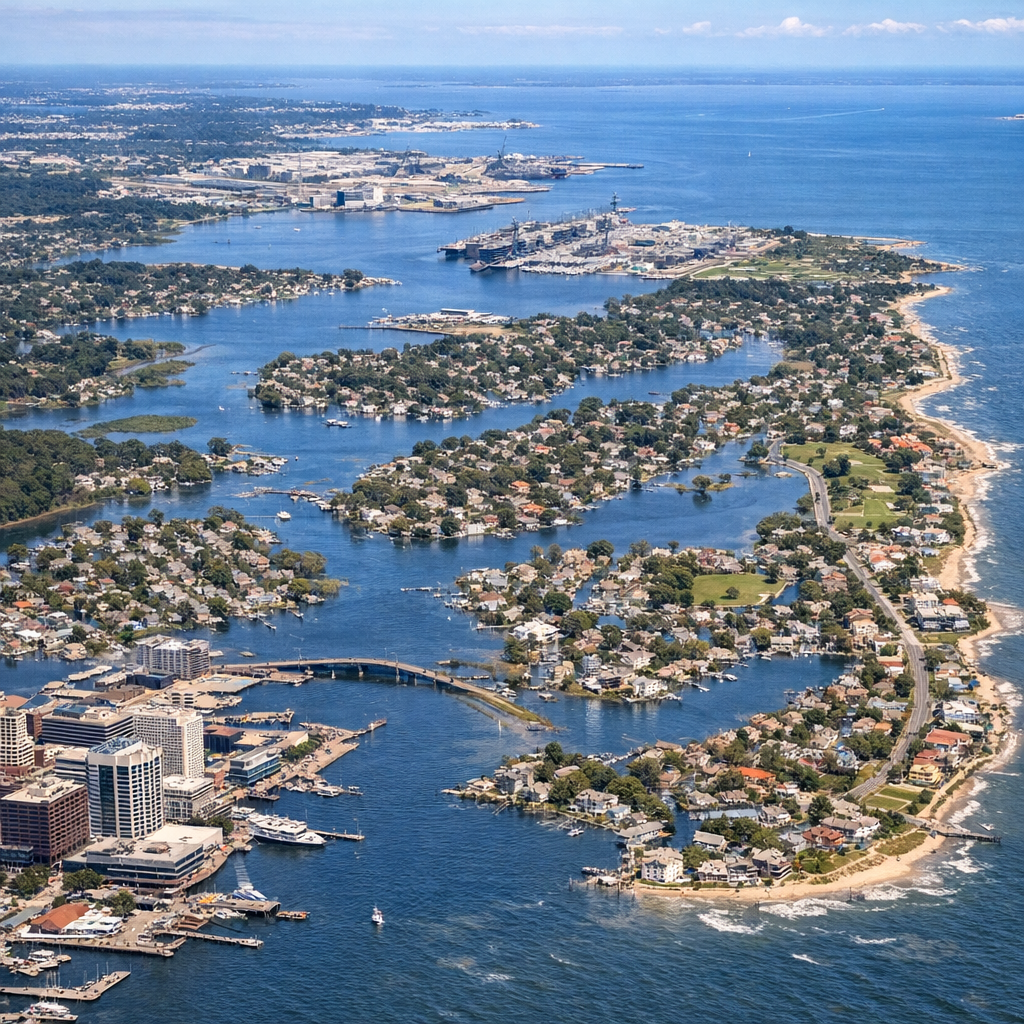
Norfolk, Virginia, with its extensive coastline and low-lying topography, is particularly susceptible to the impacts of sea level rise. This phenomenon poses significant challenges to the city’s infrastructure, economy, and daily life.
Understanding the Causes
Sea level rise in Norfolk is driven by a combination of global and regional factors. Globally, the warming climate leads to the melting of polar ice caps and the thermal expansion of seawater. Regionally, the land in the Chesapeake Bay area is subsiding, exacerbating the effects of rising waters. As a result, Norfolk experiences one of the highest rates of sea level rise on the East Coast.
Impacts on the Community
The consequences of rising sea levels are multifaceted. Increased tidal flooding disrupts transportation, damages property, and strains the city’s drainage systems. Notably, Naval Station Norfolk, the world’s largest naval base, faces operational challenges due to its vulnerability to flooding.
Local Initiatives and Adaptation Strategies
Recognizing these challenges, Norfolk has undertaken several initiatives to enhance its resilience. The city has collaborated with the U.S. Army Corps of Engineers on the Norfolk Coastal Storm Risk Management Project, aiming to develop comprehensive strategies to mitigate flood risks. Additionally, the implementation of living shorelines—natural buffers like wetlands and oyster reefs—helps absorb wave energy and reduce erosion.
Community Engagement and Future Outlook
Community involvement is crucial in addressing sea level rise. Residents are encouraged to participate in local planning efforts, stay informed about flood risks, and consider adaptive measures for their properties. While challenges persist, Norfolk’s proactive approach and community engagement offer a pathway toward a more resilient future.