

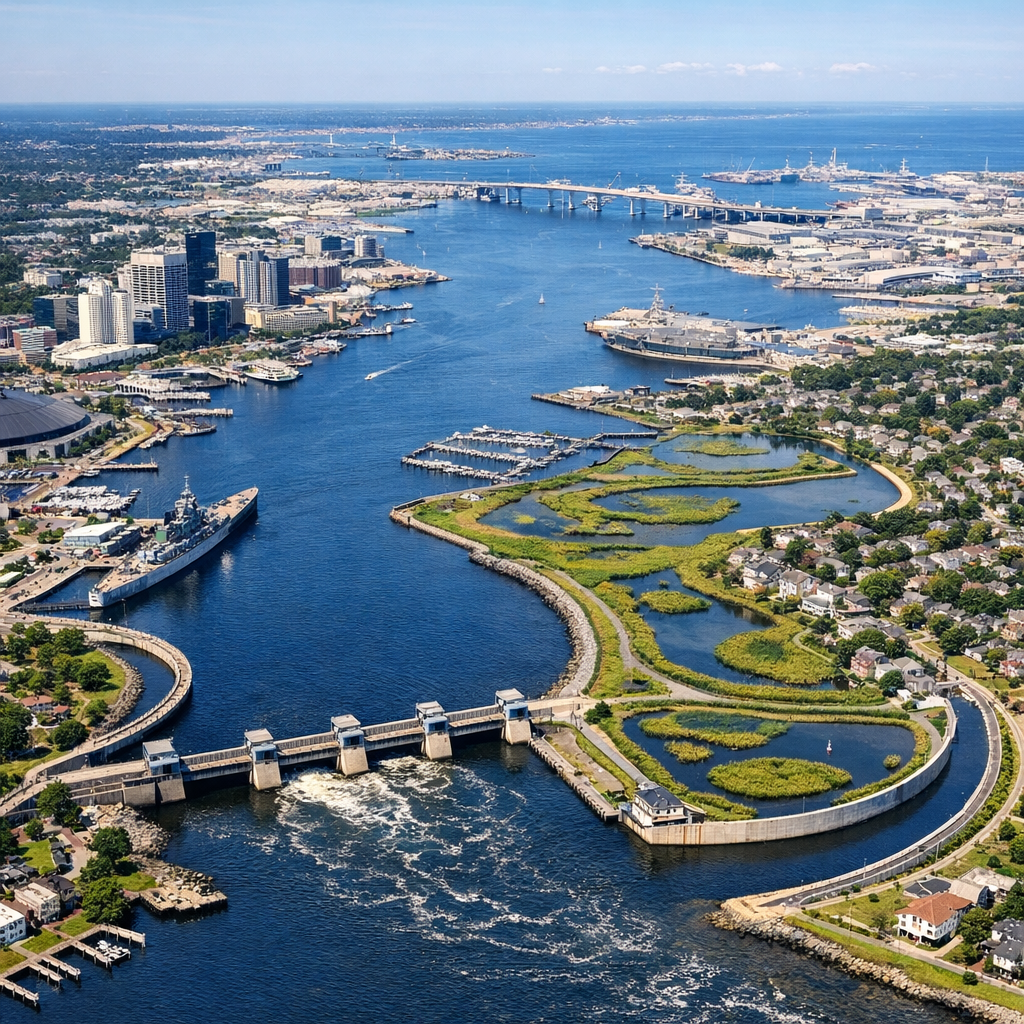
Norfolk, Virginia, a city with over 144 miles of shoreline, faces persistent challenges due to its low elevation and proximity to waterways. The city is susceptible to various types of flooding, including precipitation, storm surge, and tidal flooding. These issues are exacerbated by sea-level rise and land subsidence, leading to increased frequency and severity of flood events.
Comprehensive Resilience Strategies
In response, Norfolk has developed a Coastal Resilience Strategy that integrates planning, preparation, mitigation, and communication to reduce flooding impacts. Key initiatives include:
- Infrastructure Investments: The city’s Capital Improvement Plan allocated funds for street flooding mitigation and beach stabilization projects.
- Policy Revisions: Updates to zoning ordinances now require new constructions to be elevated, aiming to protect properties from future flood events.
These measures are designed to enhance the city’s resilience and safeguard residents and infrastructure from the adverse effects of flooding.
Community Engagement and Challenges
Community involvement is central to Norfolk’s resilience efforts. The city has conducted public outreach through meetings and engagement opportunities to gather resident input on projects like the Reconnecting Communities Project, which aims to address connectivity issues caused by past infrastructure developments.
However, challenges remain. Some residents have expressed concerns about proposed floodwalls, fearing they may obstruct views and affect property values. Additionally, historically underserved neighborhoods have advocated for equitable flood protection measures, highlighting the need for inclusive planning processes.
Looking Ahead
Norfolk’s commitment to resilience is evident in its proactive strategies and community-focused initiatives. By continuing to invest in infrastructure, revise policies, and engage with residents, the city strives to mitigate flooding risks and build a more resilient future for all its communities.