

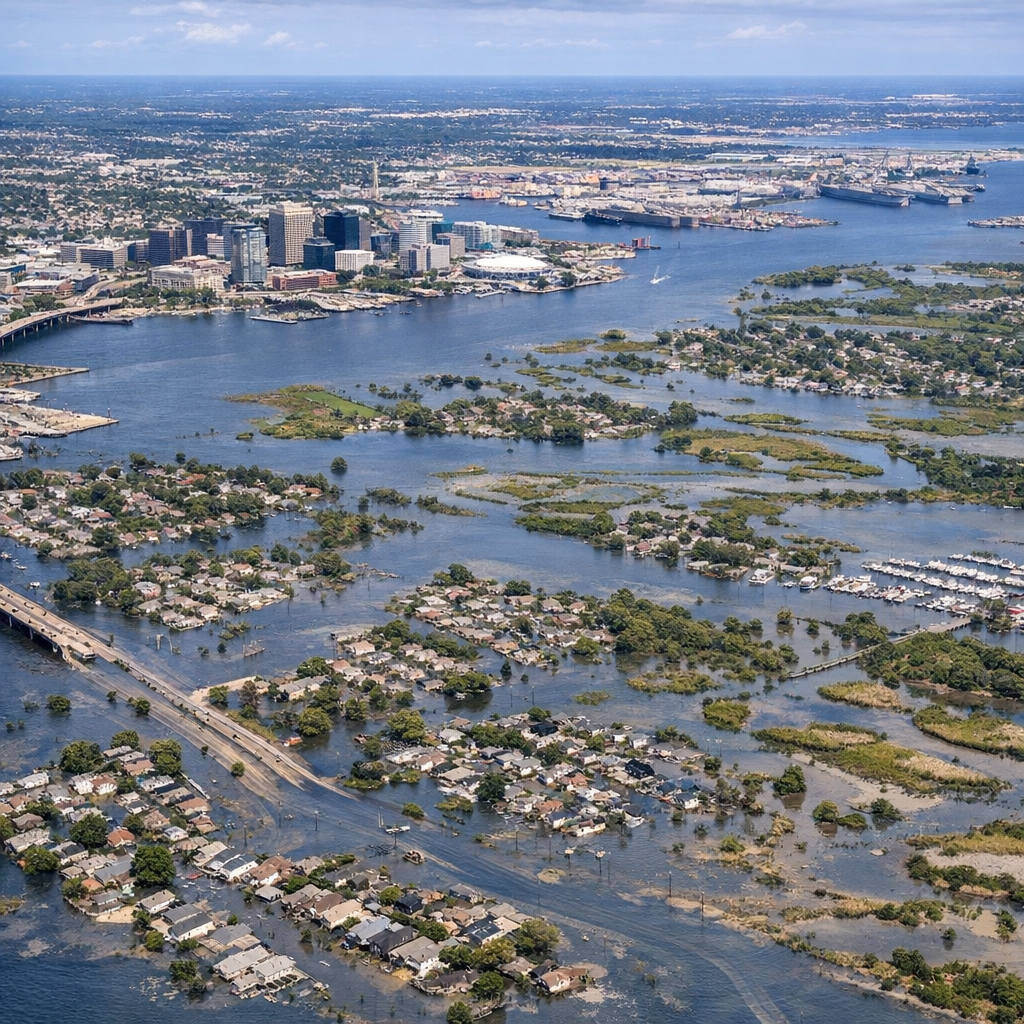
Norfolk, Virginia, a city rich in maritime heritage and home to the world’s largest naval base, faces significant challenges due to rising sea levels. Its low-lying topography and extensive coastline make it particularly susceptible to flooding.
Current Impact of Sea Level Rise
Over the past century, sea levels in Norfolk have risen approximately 18 inches, a rate higher than the global average. This increase has led to more frequent tidal flooding, affecting infrastructure and daily life. For instance, the city now experiences tidal flooding roughly 10–12 times per year, up from 1.5 days annually in the 1960s. [Source]
Projections and Future Risks
Looking ahead, projections indicate that sea levels could rise by an additional 16.5 inches by 2050. Such an increase would exacerbate flooding issues, potentially inundating critical infrastructure and residential areas. Studies suggest that with a projected 1-meter sea-level rise by 2100, the extent of tidal nuisance flooding could more than triple, impacting approximately 12% of the city’s area. [Source]
City’s Response and Resilience Efforts
In response to these challenges, Norfolk has initiated several resilience projects. The city has been collaborating with governmental and community partners to reconceive living shorelines and implement flood mitigation strategies. These efforts aim to protect vulnerable areas and adapt to the changing environment. [Source]
Community Involvement and Preparedness
Community engagement is vital in addressing sea level rise. Residents are encouraged to stay informed about local resilience plans and participate in community discussions. Understanding the risks and being prepared can significantly mitigate the impact of flooding events.
By acknowledging the realities of sea level rise and proactively implementing resilience measures, Norfolk strives to safeguard its community and preserve its rich maritime heritage for future generations.